Where to Buy KLOW Peptide Blend?
If you’re looking at the KLOW peptide blend and wondering if this is a fit for you and where to pick it up, then listen up…
KLOW is a popular peptide blend that’s composed of 4 compounds, and its growing in popularity as more and more are turning to peptides to heal their guts and tissue repair.
Inside this article, we’ll go through all the pros and cons.
Top Places to Buy KLOW Peptide
There’s a lot of noise on the net about peptides but we recommend Bio Edge Labs as our top pick…
With their third-party testing and knowing they are US based peptides, you know that you’re getting high quality peptides.
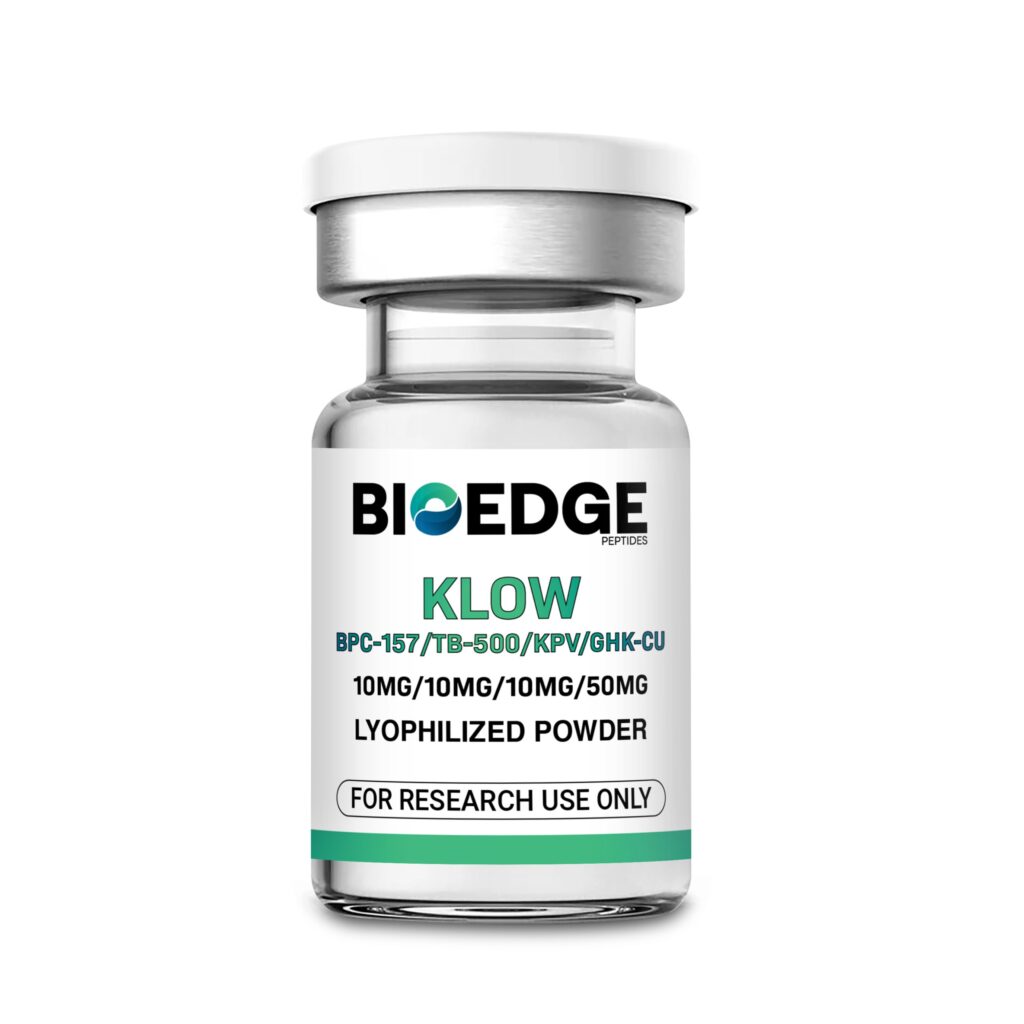
#1 KLOW by BioEdge Research Labs
Features the following blend:
- BPC-157
- TB-500
- KPV
- GHK-CU
Just go to Bio Edge’s KLOW peptide for sale
What is KLOW?
If the Wolverine Stack is the entry point into healing peptides, KLOW is what happens when someone decides to go all in.
KLOW is a four-peptide research blend that combines GHK-Cu (50mg), KPV (10mg), BPC-157 (10mg), and TB-500 (10mg) into a single 80mg lyophilized vial.
Think of it as an upgraded version of the Wolverine Stack. Where the Wolverine Stack pairs BPC-157 and TB-500 for localized and systemic repair, KLOW adds GHK-Cu for collagen production and tissue remodeling, plus KPV for targeted anti-inflammatory action. Each peptide addresses a different piece of the recovery puzzle.
The name KLOW has become a standard product identifier across multiple vendors… it’s not a brand name owned by any single company. You’ll see it listed at research peptide suppliers, regenerative medicine clinics, and everywhere in between.
People are running KLOW for joint recovery, post-surgical healing, chronic inflammation, gut health, skin repair, and general “I beat myself up training and need my body to actually recover” protocols.
The appeal is obvious: four peptides in one vial means one reconstitution, one injection, and four mechanisms of action working simultaneously.
The Breakdown
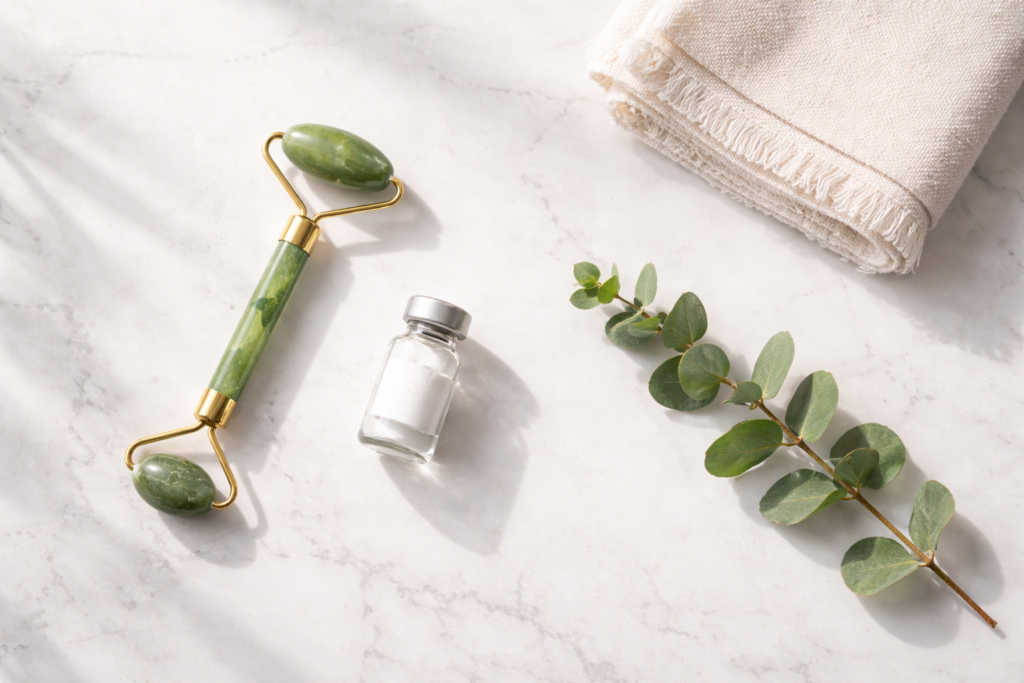
Here’s a breakdown of what you’re actually getting in an 80mg KLOW vial and why each ingredient matters.
GHK-Cu (50mg) is the largest component in the blend. It’s a naturally occurring copper-binding tripeptide that your body already produces, just in declining amounts as you age. Research shows it stimulates collagen and elastin production, promotes wound healing, and modulates gene expression related to tissue remodeling. In fibroblast studies, it’s been shown to increase collagen production by 50-70%. If BPC-157 and TB-500 are the construction crew, GHK-Cu is the architect designing the rebuild.
KPV (10mg) is a tripeptide derived from alpha-MSH (alpha-melanocyte stimulating hormone). Its primary role is anti-inflammatory. It works by downregulating pro-inflammatory cytokines like TNF-alpha and IL-6, and it does this through PepT1-mediated uptake in epithelial tissues. Translation: it’s particularly effective for gut inflammation and immune regulation. Mouse model studies showed it reduced inflammatory markers and barrier disruption in colitis models. For anyone dealing with gut issues alongside their injury recovery, KPV is the ingredient that makes KLOW different from a standard Wolverine Stack.
BPC-157 (10mg) is the same Body Protection Compound found in the Wolverine Stack. A 15-amino-acid peptide derived from gastric juice proteins, it drives localized tissue repair through angiogenesis (new blood vessel formation), growth factor signaling, and fibroblast activation. Over 100 preclinical studies have examined its effects across tendon, ligament, muscle, bone, gut, and nerve tissue. It’s the most researched peptide in the blend.
TB-500 (10mg) is the synthetic fragment of Thymosin Beta-4 that handles systemic recovery. It regulates actin polymerization, which is a fancy way of saying it helps cells reorganize and migrate to wherever the damage is. It promotes new blood vessel formation, reduces fibrosis (scar tissue buildup), and modulates inflammation body-wide. Where BPC-157 goes to the injury site, TB-500 tells the rest of your body to pitch in and help.
Together, these four peptides cover the ECM remodeling (GHK-Cu), inflammatory control (KPV), local repair signaling (BPC-157), and systemic cell migration (TB-500) layers of recovery. That’s why people call KLOW a “full-spectrum” healing blend.
KLOW Price Range and What Affects Cost
KLOW is a four-peptide blend with 80mg total content, so it costs more than a simple two-peptide Wolverine Stack.
That’s just math… more compounds, more synthesis, more testing.
Expect to pay somewhere between $120 and $200 per vial from research peptide vendors. The range depends on the vendor’s testing standards, manufacturing practices, and whether they’re running any promotions.
To put that in perspective, buying GHK-Cu, KPV, BPC-157, and TB-500 as four separate vials would run you $200-$300+ total, plus you’d be dealing with four separate reconstitutions, four storage protocols, and four separate injections. The pre-mixed KLOW vial simplifies everything at a lower combined cost.
Clinic-supervised KLOW protocols are more expensive, typically $300-$500+ depending on the practice and what’s included (consultation, labs, follow-ups). You’re paying for medical oversight and pharmaceutical-grade sourcing on top of the peptide itself.
Watch out for vendors pricing KLOW dramatically below the $100 mark.
A legitimate 80mg four-peptide blend costs real money to synthesize and test properly. If someone’s selling it for $60, they’re cutting corners somewhere, and it’s almost certainly on purity verification.
Is this Peptide Safe and Legitimate?

Let’s separate the two questions.
Is KLOW a legitimate product?
Yes. It’s a defined four-peptide blend with a standardized composition (GHK-Cu 50mg, KPV 10mg, BPC-157 10mg, TB-500 10mg) sold by multiple established vendors for research purposes. It’s not some fly-by-night concoction.
Is it FDA-approved?
No. None of the individual peptides in KLOW are FDA-approved for human use. BPC-157 and TB-500 were placed on the FDA’s Category 2 restricted list in 2023, blocking compounding pharmacies from preparing them.
However, as of February 2026, HHS Secretary Robert F. Kennedy Jr. announced that approximately 14 of the 19 restricted peptides, including BPC-157 and TB-500, are expected to return to Category 1 status. This would restore the legal pathway for compounding pharmacies to prepare them with a prescription. The formal FDA list hasn’t been published yet, but it’s widely anticipated.
KLOW is sold under the “research use only” designation. That’s the legal framework the entire research peptide market operates within.
On safety… preclinical data on each individual peptide hasn’t shown significant toxicity. GHK-Cu is a naturally occurring compound in your body. KPV showed favorable safety in mouse models.
BPC-157 has over 100 preclinical studies with no reported adverse effects in animal models. TB-500’s parent molecule (Thymosin Beta-4) has Phase 1 human safety data.
But here’s the honest truth: long-term human safety data on the four-peptide combination doesn’t exist.
Reported anecdotal side effects include mild injection site irritation, occasional fatigue, and headaches. Most people tolerate it well, but “most people say it’s fine” isn’t the same as clinical proof. Use medical supervision if you can.
KLOW vs GLOW: What’s the Difference?
This comes up constantly, so let me make it simple.
GLOW is a three-peptide blend: BPC-157 (10mg) + TB-500 (10mg) + GHK-Cu (70mg). It’s essentially the Wolverine Stack plus GHK-Cu for collagen and skin repair. The GHK-Cu dose is higher in GLOW (70mg vs 50mg in KLOW).
KLOW is a four-peptide blend: GHK-Cu (50mg) + KPV (10mg) + BPC-157 (10mg) + TB-500 (10mg).
It takes the GLOW base and adds KPV for anti-inflammatory and immune support, while slightly reducing the GHK-Cu dose to make room.
The key difference is KPV. If your primary concern is tissue repair, collagen production, and skin health…
GLOW gives you a higher dose of GHK-Cu and covers those bases well. If you’re also dealing with inflammation, gut issues, or immune regulation on top of recovery needs… KLOW’s addition of KPV makes it the more complete blend.
Both are available from vendors like BioEdge Research Labs, so you can compare product pages, COAs, and pricing side by side before deciding which fits your needs.
Frequently Asked Questions
What’s the typical KLOW dosage protocol?
Most protocols use a graduated approach starting with smaller amounts and titrating up over 2-4 weeks to a maintenance dose. A common target is 500mcg-1mg total peptide per day, administered subcutaneously. Standard protocol length runs 8-16 weeks. Since KLOW contains four peptides with different half-lives and mechanisms, some people split their dose into morning and evening injections. There’s no FDA-approved dosing, so these ranges come from practitioner guidance and community experience.
How do I reconstitute KLOW?
Add 2-3mL of bacteriostatic water to the 80mg vial. Inject slowly down the side of the vial wall… don’t blast it directly into the powder. Gently swirl until dissolved. Don’t shake it. Refrigerate after mixing and use within about 30 days. Label the vial with the date and concentration.
Does KLOW need to be refrigerated?
In lyophilized (powder) form, KLOW is shelf-stable at room temperature for several weeks, though long-term storage at -20°C is ideal. After reconstitution with bacteriostatic water, yes… refrigerate at 2-8°C and protect from light.