How to Store Peptides Properly for Maximum Potency
Peptides are fragile molecules that lose potency fast when handled carelessly. Whether you’re working with research chemicals or therapeutic compounds, the way you store them directly determines how effective they’ll be when you need them most.
Getting storage right isn’t complicated, but it does require attention to detail. Small mistakes, like leaving a vial on the counter or exposing it to light, can break down peptide bonds and render your compound useless before you even use it.
This guide walks you through everything you need to know, from understanding the basics of peptide stability to reconstitution, aliquoting, and troubleshooting degradation. Follow these steps and you’ll protect your investment and maintain maximum potency throughout the shelf life of your peptides.
Understanding Peptide Storage Basics
Why Proper Storage Matters
Peptides are chains of amino acids held together by peptide bonds, and those bonds are surprisingly sensitive to environmental stress. Heat, moisture, light exposure, and contamination can all trigger chemical reactions that break down the compound and reduce its effectiveness.
Degradation doesn’t always look obvious. A peptide solution can appear clear and normal while having already lost a significant portion of its biological activity. That’s why proactive storage habits matter far more than reactive ones.
Research chemicals in peptide form are especially vulnerable because they’re often stored for extended periods before use. Protecting them from the start ensures the stability you need when it counts.
Key Factors Affecting Stability
Several environmental variables directly impact how long peptides remain potent and structurally intact.
| Factor | Risk | Recommended Control |
|---|---|---|
| Temperature | Accelerates degradation | Freezer at -20°C or below |
| Moisture | Hydrolysis of peptide bonds | Desiccant, sealed vials |
| Light Exposure | Photodegradation | Amber vials, dark storage |
| Oxidation | Damages sensitive residues | Inert atmosphere, antioxidants |
| pH Levels | Structural instability | Buffered reconstitution solvents |
| Contamination | Microbial breakdown | Sterile technique, bacteriostatic water |
Each of these factors compounds the others, meaning poor temperature control combined with moisture exposure will degrade your peptides far faster than either issue alone.
Understanding these variables gives you a clear framework for making smart storage decisions at every stage of handling.
Storing Dry and Lyophilized Peptides
Optimal Temperatures and Conditions
Lyophilized peptides, also called freeze-dried peptides, are the most stable form you’ll encounter. The freeze-drying process removes moisture and significantly extends shelf life compared to liquid solutions.
For long-term storage, keep lyophilized peptides in a freezer set to -20°C or colder. Short-term storage of up to a few weeks is acceptable in a refrigerator at 2°C to 8°C, provided the vial remains sealed and dry.
Never store peptides in a frost-free freezer. These units cycle through slight temperature fluctuations to prevent ice buildup, and those cycles accelerate degradation over time.
Here are the core conditions to maintain for dry peptide storage:
- Keep vials sealed until ready for use
- Store away from direct light exposure using amber or opaque containers
- Use a desiccant packet inside storage containers to absorb any ambient moisture
- Maintain consistent temperature without repeated cycling
- Label each vial clearly with compound name and storage date
Proper cold chain management during shipping also matters. If your peptides arrive warm or show signs of moisture inside the vial, contact the supplier before proceeding.
Handling Before Use
One of the most common mistakes researchers make is opening a cold vial immediately after removing it from the freezer. The temperature difference between the frozen vial and warm room air causes condensation to form inside the container.
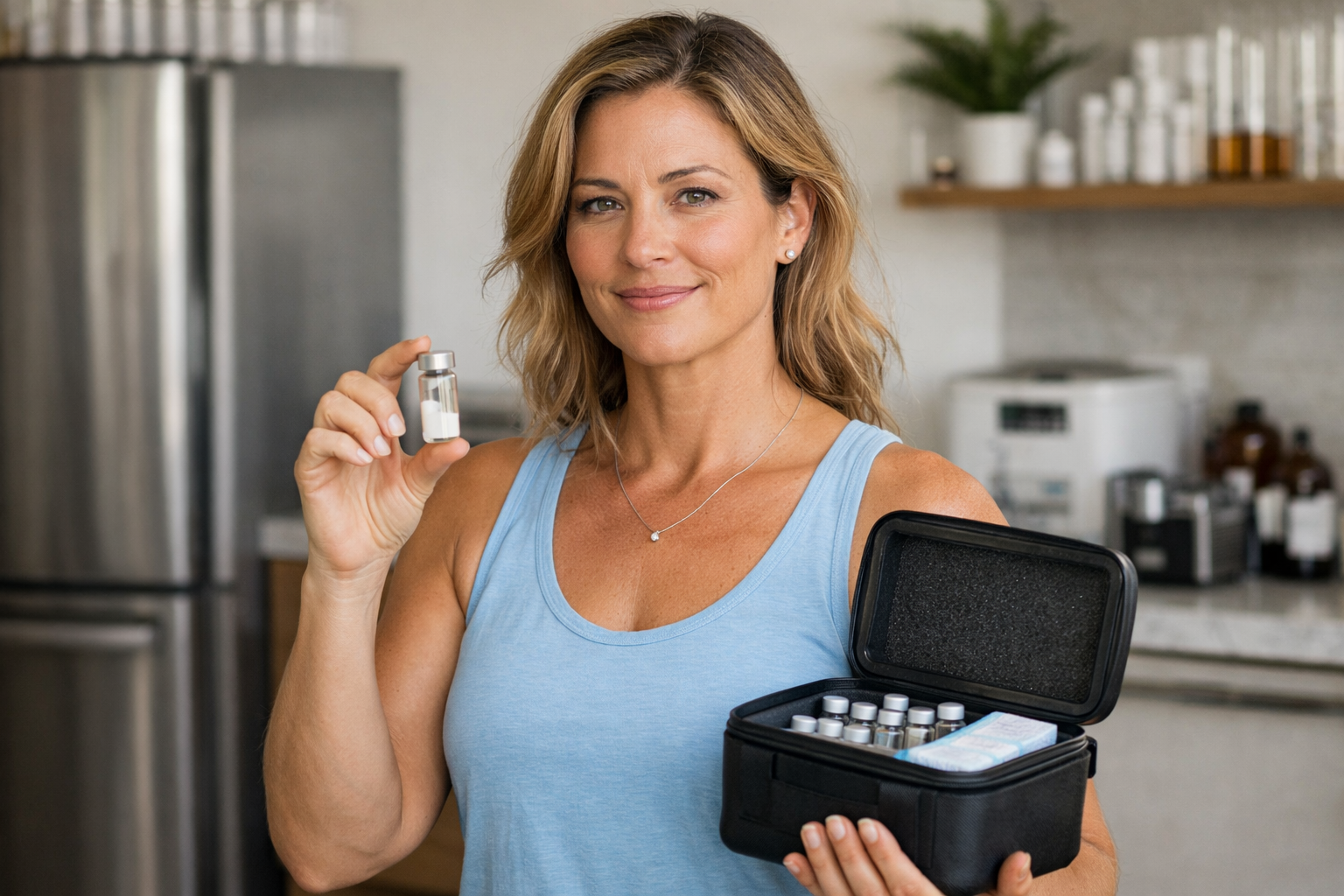
That moisture introduces hydrolysis risk directly to your lyophilized peptide. Always allow the sealed vial to equilibrate to room temperature before opening it, which typically takes 15 to 30 minutes.
- Remove the vial from the freezer while still sealed
- Let it sit at room temperature until fully warmed
- Only then remove the cap or stopper for reconstitution
- Work quickly once opened to minimize air and moisture exposure
This simple habit protects the structural integrity of your peptide before you even begin the reconstitution process.
Reconstituting and Storing Peptide Solutions
Step-by-Step Reconstitution Guide
Reconstitution converts your lyophilized peptide into a usable solution. The solvent you choose and the technique you use both affect stability and sterility.
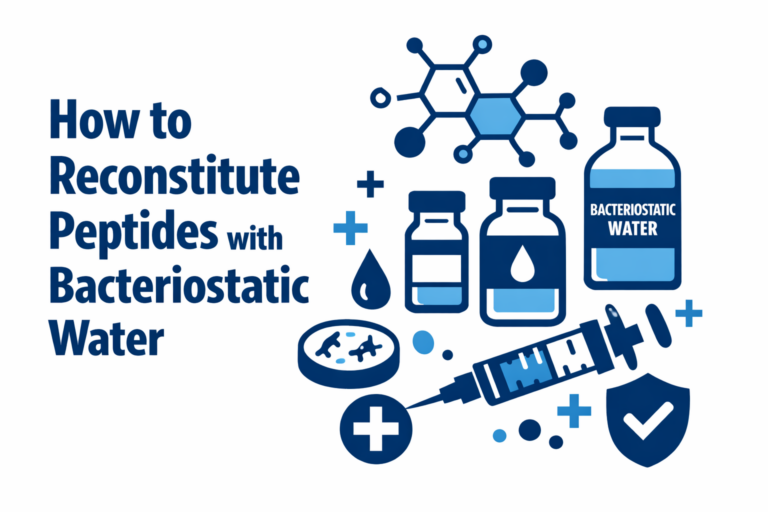
Bacteriostatic water is the most widely recommended solvent for peptide reconstitution. It contains 0.9% benzyl alcohol, which inhibits microbial growth and extends the usable life of your solution compared to plain sterile water.
- Use a sterile syringe to draw the appropriate volume of bacteriostatic water
- Insert the needle through the rubber stopper of the peptide vial at an angle
- Allow the liquid to run slowly down the inside wall of the vial rather than directly onto the powder
- Gently swirl the vial to mix, never shake it vigorously
- Confirm the solution is clear before proceeding
Shaking creates bubbles and mechanical stress that can physically damage the peptide structure. Gentle swirling or slow rotation is always the right approach.
Check pH levels if you’re working with peptides known to be sensitive to acidic or basic environments. Some compounds dissolve more effectively in slightly acidified water using dilute acetic acid.
Aliquoting and Freezing Best Practices
Once reconstituted, peptide solutions are significantly more vulnerable to degradation than their lyophilized counterparts. The goal is to minimize the number of freeze-thaw cycles each portion experiences.
Aliquoting means dividing your reconstituted solution into smaller single-use portions before freezing. This way, you only thaw what you need each time, protecting the rest from repeated temperature stress.
- Use sterile, low-binding microcentrifuge tubes or vials for aliquots
- Divide the solution into volumes matching your typical usage amount
- Label each aliquot clearly before freezing
- Store aliquots in a freezer at -20°C or below
- Keep one working aliquot in the refrigerator for active use, consuming it within two to three weeks
Avoid storing reconstituted peptides at room temperature for any extended period. Even a few hours of unnecessary warmth can meaningfully reduce potency, especially for compounds with sensitive amino acid residues.
Oxidation is a particular concern for solutions stored improperly. Minimizing headspace in your storage vials and using inert gas if available helps reduce oxidative degradation.
Practical Applications and Troubleshooting

Common Storage Scenarios
Different research contexts create different storage challenges. Understanding how to adapt your approach to real-world situations keeps your peptides protected regardless of the setting.
If you’re storing multiple peptides simultaneously, organize them by stability requirements. More sensitive compounds with cysteine or methionine residues need stricter conditions than more robust sequences.
- Short-term active use: refrigerator at 2°C to 8°C, consume within two to three weeks
- Medium-term storage: freezer at -20°C in sealed, labeled vials with desiccant
- Long-term archival storage: -80°C freezer for maximum shelf life preservation
- Travel or field use: insulated cold pack, minimize time outside refrigeration
- Bulk research stock: lyophilized form stored at -20°C until needed
Cold chain integrity matters throughout the entire lifecycle of your peptides, not just during initial storage. Every transfer, shipment, or handling event is an opportunity for temperature excursion.
Contamination risk increases every time you access a vial. Using bacteriostatic water and maintaining sterile technique with each syringe insertion significantly reduces microbial growth risk.
Troubleshooting Degradation Issues
Even with good storage habits, you may occasionally encounter signs that a peptide has degraded. Knowing what to look for helps you catch problems early and avoid using compromised compounds.
Visual changes are often the first indicator. Cloudiness, color shifts, or visible particulates in a previously clear solution suggest contamination or structural breakdown.
- Cloudiness or precipitation: possible aggregation or contamination, discard if uncertain
- Unusual color: oxidation or chemical degradation, especially in peptides with aromatic residues
- Reduced solubility: may indicate moisture damage to lyophilized stock before reconstitution
- Unexpected odor: microbial contamination, discard immediately
- Loss of expected biological activity: degradation may have occurred without visible signs
If you suspect degradation, the safest course is to discard the affected material and start fresh. Using degraded peptides in research produces unreliable results and wastes time.
Prevention is always more efficient than troubleshooting. Investing in proper storage equipment, including a reliable freezer, quality vials, and desiccant, pays off in consistent, reproducible results.
Conclusion
Protecting peptide potency comes down to controlling a handful of key variables consistently. Temperature, moisture, light exposure, oxidation, and contamination are the primary threats, and each one is manageable with the right habits and equipment.
Lyophilized peptides stored in a freezer with desiccant and proper sealing will maintain their stability for extended periods. Reconstituted solutions require more active management through aliquoting, cold storage, and minimizing freeze-thaw cycles.
The effort you put into proper storage directly translates into more reliable research outcomes and better return on your investment in quality peptides.
FAQ
Can peptides be stored at room temperature?
Lyophilized peptides can tolerate brief periods at room temperature, such as during shipping or handling, but should not be stored there long-term. Reconstituted peptide solutions should never be left at room temperature for extended periods, as degradation accelerates significantly without refrigeration or freezer storage. Always return peptides to cold storage as quickly as possible after use.
How do I avoid freeze-thaw damage?
The most effective strategy is aliquoting your reconstituted solution into single-use portions before freezing. This means each aliquot only goes through one freeze-thaw cycle before being consumed. Avoid repeatedly freezing and thawing the same vial, as each cycle causes physical and chemical stress that reduces potency and shortens shelf life.
What if my peptide contains sensitive residues like Cys or Met?
Peptides containing cysteine or methionine residues are particularly vulnerable to oxidation. Store these compounds under stricter conditions, including minimizing headspace in storage vials, using inert gas where possible, and keeping storage temperatures as low as practical. Some researchers add small amounts of antioxidants to reconstitution solvents for these sensitive sequences, though this should be done carefully to avoid interfering with the peptide’s intended application.